Everett De Morier has spent years writing about gangsters, con men, criminals, dreamers, and visionaries. But lately, the most fascinating stories in his life aren’t the ones with his name on the cover.
They’re the ones nobody knows he wrote.
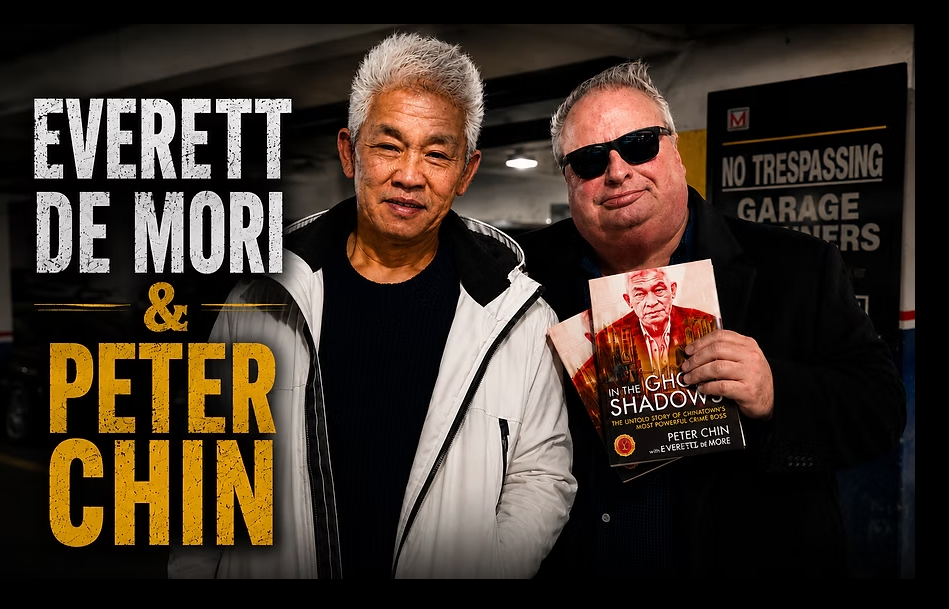
On paper, De Morier has already built the kind of career many writers spend a lifetime pursuing. His novel Thirty-three Cecils captured the London Book Festival Fiction Prize and is currently in feature-film development with Matthew Modine and Dustin Hoffman attached. His acclaimed true-crime book In the Ghost Shadows: The Untold Story of Chinatown’s Most Powerful Crime Boss earned an Edgar Award nomination and is now being developed as a documentary series by Curtis “50 Cent” Jackson’s G-Unit Film & Television.

His newest book, The Spider King: The Most Notorious Criminal Mastermind You’ve Never Heard Of, won’t hit shelves until October 2026. Yet Hollywood was already circling. Documentary rights landed with Steve Rotfeld Productions, while scripted film and limited-series rights were snapped up by Upstream Entertainment.

For most writers, that’s the destination. For De Morier, it turned out to be a detour.
“The older I get, the more I enjoy helping other people tell their stories,” he says. “Honestly, I never expected that.”
There was a time when he viewed ghostwriting as creative surrender.
“Back then we were all purists,” he laughs. “You thought writing someone else’s book meant you failed to write your own. Now I think the exact opposite. What’s better than getting paid to sit across from somebody and hear the most unbelievable story you’ve ever heard?”
Over the last decade, De Morier has quietly become one of publishing’s best-kept secrets. Entrepreneurs. CEOs. Crime victims. Convicted criminals. Public figures. People carrying stories too complicated—or too painful—to tell themselves.
Many arrive with a stack of documents and a lifetime of memories. Most don’t realize they have a story at all.

“The biggest misconception is that the story is the events,” De Morier says. “It’s not. Anybody can make a timeline.”
What interests him are the decisions. The moment someone crossed a line. The lie they told themselves before they did it. The fear they never admitted.
“The story is always underneath the story.”
That philosophy has fueled both his published work and his ghostwriting career. Whether he’s chronicling a Chinatown crime boss, an international cybercriminal, or a billionaire entrepreneur, De Morier is less interested in what happened than why it happened.
“The crimes are easy,” he says. “The psychology is where things get interesting.”
His reputation has spread quietly through literary agents, producers, publishers, and executives looking for stories that can survive beyond the page. Today, De Morier ranks among the highest-rated ghostwriters on Reedsy, an elite publishing marketplace that accepts only a small percentage of applicants.
The assignments have become increasingly unusual.
One client flew him first class across the country to discuss a memoir.
Another arrived carrying boxes of court files.
Some projects become books. Others become documentaries, podcasts, television series, or feature films.
A few never see daylight.
But almost all of them begin the same way: two people sitting across from each other trying to figure out what a life actually means.
“Most people aren’t looking for sympathy,” De Morier says. “They’re looking to be understood.”
That search for understanding has created an unexpected side effect. Many clients become friends.

“You spend months or years talking about the most important moments of someone’s life,” he says. “You can’t do that without building trust.”
In an era obsessed with personal brands and public visibility, De Morier has found himself moving in the opposite direction—behind the scenes, helping other voices take center stage.
It’s an unusual position: accomplished author, award-winning storyteller, and invisible collaborator.
But he doesn’t see a contradiction.
“The books with my name on them matter to me,” he says. “They always will.”
Then he pauses.
“But there are incredible stories everywhere. Stories that never get told because the people who lived them don’t know how to tell them.”

For a writer who spent years chasing his own voice, Everett De Morier may have discovered something even more rewarding: Helping other people find theirs.