
Our Wired GPS

Let’s say you’re driving cross-country, New York to California, and you are smack dab in the middle of . . . let’s go with Kansas. You’re on this straight and lonely road with very little traffic and not much to see other than fencing and tumbleweeds. In fact, you can’t remember the last car you’ve passed, and you haven’t had a cell signal in at least an hour. Right then, in the middle of the state, a warning light pops up on your dashboard. Ping. Because there aren’t many options to pull over, you ignore it and just keep the car pointing west. But then another warning light flashes on. Then another. And then you hear a clanging sound under the hood and black smoke comes billowing out of the exhaust. But that’s not the bad part. The bad part is that you realize, right at that moment, that you forgot to get gas at the last rest stop and now you are running dangerously low. Just as you are ready to go into a full-blown panic, wait . . . what’s that? Way up ahead, you see a sign for a service station just a few miles farther on. And you can see from the sign that this is one of those actual service stations, a place that not only fills your tank but also sells tires and repairs engines. You grip the steering wheel tightly, keep your eye on the horizon, and two miles later, leaving a cloud of deep black smoke behind you, you coast into the service station mere seconds before the car runs out of gas. You made it. All right! Then, you fill the car with gas and head back out onto the road. Without. Fixing. Anything. Else. The car is clanging and shooting smoke everywhere and yet you get back on the road with a full tank of gas and a smile on your face. That is exactly what I do every time I want to make major changes in my life. I get excited. I fill the tank with goals and ambitions and plans and positive thoughts and then I drive the car with smoke shooting out of it, the engine clanging, the steering wheel shaking, and I’m completely surprised when I get stranded a few miles down the road and don’t get to that financial location, or fitness location, or career location, or personal growth location that I’m shooting for. I never, ever get there, but I head out optimistically, every single time, with a vehicle that is spitting and sputtering and leaving me covered with smoke and oil. The thing is, I have been driving with all those smoking parts and broken hoses for so long that I don’t even notice them anymore. At first, I tried just wishing them away, ignoring them, hoping that when I got to the first rest stop, when I achieved a little success in one area, it would just, you know, magically replace all the faulty parts in the others. But now I realize that If I’m even going to make it to the first rest stop, I need to fix and patch and replace every one of the broken pieces and rewire it all. I need to be able to make a living in a field that I’m actually good at and can take some pride in. I need to be healthy. I need to get my finances under control and not be addicted to my cell phone, worried that a bad email is coming in or I screwed up in some way. I need to be confident in what I do and excited about it. I need to enjoy life and make a difference to those around me. I have programmed myself to be right where I am. I didn’t mean to. It wasn’t the plan. But every fear, every worry, every pain point in my life has led to another line of code being secretly written to reduce the pain that I perceive I feel. And with each individual alarm, warning, electric fence, shock collar, all of which were intended to keep me safe, the world became smaller, since I was forbidding myself from going past them. It’s like when we set our GPS for the address of a restaurant we’ve never been to and we follow the directions blindly and when the GPS chirps, “You have reached your destination on your left,” we’re excited. Then we look out and see that we’re not at a restaurant but in the middle of a cornfield. We stop and say, “Hey, this isn’t right.” The problem is, in life, we never get to that cornfield. We just keep following our emotional GPS. If it says go right, we go right for years and years and years, whether it’s taking us where we want to go or not. The irony is, we are the ones who programmed the car’s GPS. We went into the advanced screen and added a few rules. Yes, take us to the restaurant, but only use roads that we’ve been on before. No new roads. Don’t take us on any routes that are frightening or risky; don’t allow us to worry about getting there. Don’t take any toll roads, and don’t take any routes that could get us stuck. We are the ones who set and alter the lines of code in our life. We have told our mind which areas to skip, to avoid, to run from, and what to reward us with. We press the GPS button and start the car and drive. Around and around we go. We can’t go on that new career road because we’ve never been on it before, and we can’t go on this one because it’s a dirt road. So, we drive around some more, feeling optimistic because we’re moving but confused about why we never seem to arrive. If I were to make any significant changes in my life, I need
Get a Partner. In Fact, Get a Few.

In my creative life, the people who have helped me along the way fall in two basic categories. The first are those I have given money to: website designers, advisors, marketing people, promotion experts, public relations gurus. We talked, we agreed upon a price, and they did the work. The second group is a little different. Here, we talked. We got to know each other, we understood each other’s principles, goals, talents, and philosophies. And if their talents complemented mine, if their passions, ethics, and goals were the same, then we decided to work together on a specific project. No money changed hands. We simply created an agreement that we both would do our part to get this project done, we collaborated and communicated, no matter how long it took, and we would both win only if the project won. We became partners. Now, the first group of people, the ones I paid, are long gone. I don’t even think I remember all their names. But the second group is still with me. In some cases, we’ve completed our first project and moved to another one. And another. I have three such creative partners. The first is Tara Tomczyk, editor in chief of Blydyn Square Books. Tara was tired of the decades she had spent in the brick-and-mortar publishing world and even more tired of the books they were turning out. She wanted to create her own publishing company and promote the type of books that were getting ignored. We started to talk, we met a few times, I gave her the rough draft of Thirty-three Cecils, and even before she had formed a company, we began to work on it. This may sound like the end of the story of my partnership with Tara, but it’s just the beginning. Besides helping me make the book the best it could be, besides financing it and publishing and promoting it, Tara traveled to book release parties and promotional events—just for comparison, when my first two books were published in the 1990s, I never even met my editor. But Tara came with me when we launched Cecils in Binghamton and was at the very first book release as well as a few writers’ events we were invited to. After Cecils, we started working on another book called The Invention of Everything and Tara did the same thing there. And once again, she traveled to support book events. Even when the book became the subject of a documentary, Tara came to both the filming and the premiere. Tara and I email or talk practically every day on different projects we are both working on. She is the first person I went to regarding Rewiring Everett, and her advice, direction, and willingness to help was crucial. The second creative partner I have is an individual named Brian Esquivel. Brian is a film producer who is developing Thirty-three Cecils into a major motion picture. Brian’s pedigree is long: He first cut his teeth on the HBO series Entourage and then branched out from there. Brian has put up with a lot from me over the years, from having movie posters made and sent to him long before we even had a script outline to having reporters call him for comments on a story about the film when we hadn’t even began working on the screenplay yet. Brian was patient. He took my messed-up script and turned it to a working story that could be filmed. He focused on finding directors and others who believed in the book and the film and began to build a team. Brian didn’t watch the clock. He didn’t have a time frame when he would call it quits; he just believed in the project and knew we would all get there eventually. I went to Brian with my idea for Rewiring Everett, explaining how I wanted to take the concept from the novel and film and try it in real life. Brian was very supportive and helpful. His support was my last test: I knew we had something worth developing. Which brings me to my latest creative partner. His name is Quinn Butler—which is the coolest name ever, by the way—and he is this bright, optimistic, and energetic journalism student at NYU. We talked. We got to know each other. I told him about Rewiring Everett and he asked a lot of questions, bringing up some very important points and coming up with insight that I didn’t have. Our goals and philosophies matched, so Quinn became my partner in Rewiring Everett. He’ll be responsible for all the things that I suck at, which means everything except writing this blog, the book we are working on, and sticking my fat face in front of the camera for the platform videos and interviews with others. All the real work, the important stuff—that’s all Quinn. Why am I telling you this? Well, for two reasons. The first is that in my experience, this creative partnership idea works. I mean, it really works. So, I am giving it to you and advising you to go get a few partners of your own because these relationships are amazing and important. In anything creative, in anything out of the box, don’t pay someone to help you. Find a partner who will be there with you and will share the rewards at the end. Post an ad, start reaching out, take your time, and find the right person. And find people who aren’t afraid to tell you when an idea needs work, when it might be going in the wrong direction or is just plain stupid. These types of individuals are invaluable. Work hard for them and they will work hard for the project, because you both win when the project wins. The second reason I’m telling you all this is to let you know that there are some very smart, very passionate people I respect very much who are working on, advising, and ready to help with Rewiring
Rewiring Everett
In 2015, Blydyn Square Books published a novel entitled Thirty-three Cecils that was written by yours truly. I am using the phrase yours truly because I think it’s one of the most pompous phrases out there, so I am writing it here to break the ice. Not for you, but for me. Because if we are going to do this, if we are going to test the Rewiring Everett concept, then I have to put myself out front. I have to become the subject matter. The lab rat. The focus. And this will be crossing well over the line into my discomfort zone, so I’d better start getting used to it now. When Thirty-three Cecils came out, it won the top fiction prize at the London Book Festival, it became required high school reading, it was used in writing classes and book clubs, and it had the film rights optioned. Now, you could see all these facts as self-aggrandizing, I guess, but I really just mention them to offer credibility to this project and to introduce some of the amazing people involved in it. More of that to come. The novel concerned two men from totally different cities and backgrounds. One is a white-collar ex-con who has returned to his hometown to restart his relationship with his two young daughters. The other is an alcoholic who works in a landfill whose wife has left him and whose only friend is whoever happens to be sitting on the next barstool. During the course of the novel, these men determine that they not only need to change their lives, but they need to change the very core reactions, drivers, fears, and motivations that got them to where they are. They need to completely rewire themselves. Otherwise, they could abstain, they could try to break through, they could set goals, they could take all the right steps, but it just would not matter. Eventually, their programming would take over and they would end up in the same place they were before. That concept brought up an interesting question: Can we really rewire ourselves, or is this just the stuff of novels? And if people can rewire themselves, can I rewire myself? I mean, I’m not anything like the characters from my novel. I’ve never been to prison. I’m not an alcoholic. I’ve never been divorced. In fact, I have been happily married for 28 years and have two great kids and daughter-in-law I adore. I also have a nice home and consider myself very lucky. But I would also consider myself a good test subject because . . . well, I’m a total mess. Now, you may have also noticed that I’m using the present tense—I am a mess—and not the past tense, suggesting that I once was one. I have not moved on from this condition. I’m not writing to you from a safe distance away. I am here. Which is the perfect place to start, but exactly the opposite of how most self-help stories begin. Usually, they start from the other direction. At the end. Where the individual is standing aboard his sailboat in his designer yachting pants telling you how broke and out of shape he once was, but hey, look at me now. Well, that’s not me. I don’t even know what yachting pants are and I’m pretty sure that I just made them up. If we are going to do this, if we are going to rewire me, then we can’t start at the end. We need to start from where I am now. Live. Here. From the beginning. If we are going to do this, then it needs to be from this point, honest and open and transparent. You get a ringside seat to my personal, big, fat mess. The fat part of this mess comes from this: I’m pushing 300 pounds on what should be a 170-pound frame, I’m unhealthy, and I haven’t even been able to get my wedding ring on for seven years. I’m also an emotional mess, with the majority of each day being spent worried, frightened, frustrated, unfulfilled, and hoping something amazing will just fall from the sky and change it all. I am also one of the world’s leading guilt-catchers and don’t believe I deserve what I have and that I will somehow mess things up worse than they are now and even that will be taken away. On the social scale, I’m a mess because I don’t really contribute to anything, to any organization, to any cause, to any community. I don’t help anyone other than my immediate family. And outside of my home, I don’t make much of a difference. Now, as I describe myself to you, you may be picturing this huge, broken soul who might throw you a sob story in between bites of his triple-meat hoagie and try to borrow a few bucks from you if we ever shared an elevator together. But the truth is that, like many of us, my mess is pretty camouflaged. If we were in that elevator, you would smile and so would I, and we might even strike up a friendly conversation, which might lead you to even feel slightly good as the elevator door opened and we both stepped out: You first, of course. Have a nice day. And that’s how it is with most of us whose lives, or specific parts of it, are messed up. We are friendly people. Nice people. We are good people. We are productive people who have much to be grateful for. And most of those around us, even the ones we are close to, will most likely never know what is going on in behind all those wires. So after thinking about this, we decided to test it. For Everett to be the guinea pig. I’m not doing this to attempt to obtain a specific prize, reach weight goal or financial level, or so that a year from now I can stand in
The two rules of writing …
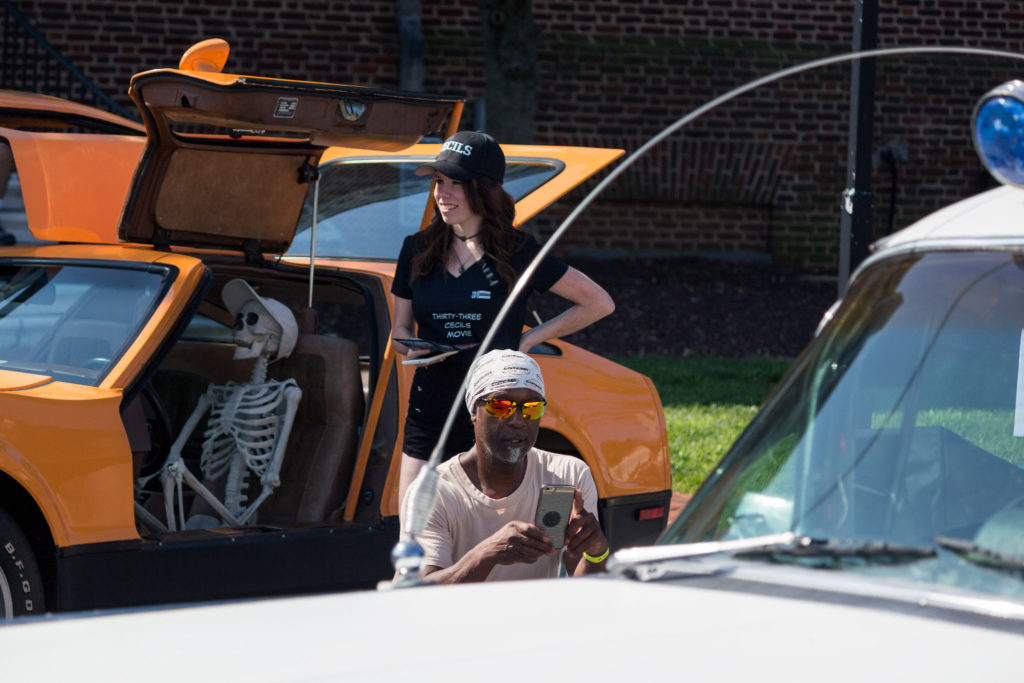
Writing is a pretty solitary deal. I mean, you sit in front of a computer and you press little buttons, alone. A creative game sure, but a single player one. Now you can make the setting a little more exotic if you’d like and have the writer in a dark and smoky bar or a sidewalk café, scratching together a few stubborn lines with a fountain pen in one hand and a tumbler of whiskey in the other. And I’m sure someone, sometime, someplace has done that. But the process itself still contains one single person funneling their thoughts to paper. And even though you can be in a crowded room while writing, it’s still done alone. But let’s fast forward to the glamorous goals of the writing process. Let’s say the book you are working on becomes a huge success, the novel becomes a bestseller, your screenplay is picked up by Warner Brothers, and there are awards and banquets and guest appearances and book signings and Ted Talks and television interviews and red carpets and all those amazing accolades celebrating how brilliant you are and all of them will be done in large social groups. Sure. During that part you’re not alone. But this is a celebration once the work is complete. The work you did alone. A celebration of your solitary efforts — and for the ego of most of us writers, this is not a bad thing at all that it’s all about us. But the entire journey to get there, that was done by yourself. Which means you get to claim all the rewards, but you also had to you carry the entire burden. So here is what I’ve discovered recently that is, well, it’s pretty frickin’ amazing. And once I discovered it, it changed everything about how I write. No, that’s not true. It changed the drive behind the writing. The reason. The rules. But first I have to tell you about my story. My very cool story that happened last night because, well, because it’s the coolest story ever and I’m dying to tell you. Ready? Okay, here we go. Last night, about one in the morning, I got out of bed to, well, to do what middle aged men do a few times each night. And when I had finished that chore, I saw that my cell phone on the dresser was lit up. I almost always leave the phone in the office downstairs but had it in my pocket when I came up and didn’t feel like walking it back down. So I turned the ringer off and left it in the dresser. But the screen was now lit, meaning that a text had just came through. I looked and saw that it was from Jesse, one of the producers of the Thirty-Three Cecil’s, film. It read, WE FOUND THE CAR. CALL ME WHEN YOU CAN. Now I assumed that the car Jesse was talking about, was the Bricklin SV1. A big part of the novel and one that would be a pivotal scene in the film. And since it was only 10:00 pm on west coast, I called Jesse back. Jesse quickly conferenced called in Kate, the script producer. Which means that I now get to now drop this incredible phrase into a cocktail party discussion — if I’m ever invited to a cocktail party. — that goes, “Oh sorry if I yawned, I had a conference call at 1:00 am this morning with the producers in L.A. concerning my novel that they are turning into a film” Which although obnoxious, would be fun to say and is probably the very reason I don’t get invited to cocktail parties. “You found a Bricklin?” I asked Kate. “We found three,” Kate answered, excitedly. And she told me about how in just a few hours of looking they had tapped into this Bricklin community that was downright giddy that a film was being made with a Bricklin in it. Jesse and Kate had been working on the budget that day and this was the first time we had talked since going over the script notes they had for me, the week before. “And let’s talk about that,” Jesse joked. “You rewrote that entire script, did it well, in two days. That’s pretty impressive.” Now this may sound boastful mentioning this, and I don’t mean it to be, but it’s necessary because Jesse’s comment is needed to start talking about this writing thing. About the very aspect I’m writing about here. So let’s start with that. Have I learned to write decent dialogue and write it fairly quickly? Sure. But how? Well, I didn’t learn it from classes or workshops — not that these don’t have value — but I learned because for eight years I volunteered to work with an amazing group of actors and singers where I got to write an original play each year, every year. Because of that, I had to learn to make dialogue count, to make each word matter, and to do it quickly. In fact, there was even one year that a few days before the reveal, we realized that the script I had written was crap. So we scrapped it. And I wrote a new one in a week. A better one that we were all happy with and we filled every seat for the four shows. Now was I able to do this because I have any more talent or drive than anyone else? Absolutely not. I got good at dialogue because there were people that were counting on me to do so. People that needed my work to be good, so there’s could be. Which leads me to this first discovery. #1. The most fulfilling writing is done in writing projects, not in writing. The greatest joy I get from writing, comes from writing projects I’m involved in, where the writing is only part of something else. Something bigger. From plays, to a
Book Review: Shark In The Housing Pool: On The Run With The Secret Service’s Most Wanted
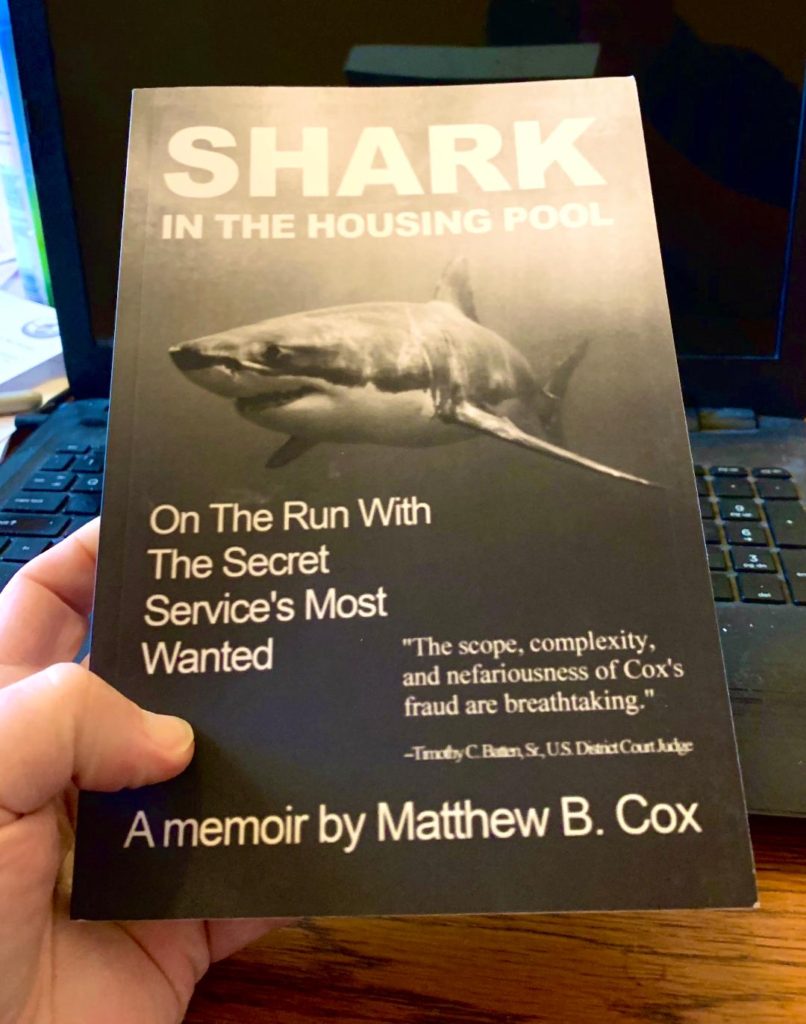
I first heard of Matt Cox several years ago because, well, I have a mild to moderate American Greed addiction. There I’ve said it. I have seen every episode of the show at least once and many of them multiple times. Now if you are not familiar with American Greed, it is a true crime documentary series where each episode focuses on one particular high-profile white-collar scammer. From Jorden Belfort (Wolf of Wall Street), to Tyco executive Dennis Kozlowski, to Kenn Starr, to the granddaddy of them all, Bernie Madoff. And the episode on Matt Cox was one that I watched on multiple occasions. Matt was estimated to have stolen 15 million dollars in an incredibly elaborate and creative set of mortgage scams. In fact, Matt stole 11 Million after being caught the first time and being placed on probation for fraud, and then another few million while on the run. Matt has been released from prison and has written his memoir entitled, SHARK IN THE HOUSING POOL: On The Run With The Secret Services Most Wanted. When starting the book, the first thing I noticed was that it passed my ‘first page test’. Over the years I have become a bit of a snob when it comes to writing ability and I have been known to close books after only a few paragraphs. On a few occasions, the first few sentences. But Matt’s book drew me in early with his warm and honest tone. Looking back on my life, if I’m going to be completely honest, I wasn’t even supposed to be here… There is a frank and simple style to his writing that falls in that — you can’t teach this, category. Not practiced or elegant, but also not formulaic or tried. This works well, because Matt has no formal training in writing and even battles with severe dyslexia, making the book and others he’s written, even more impressive. SHARK IN THE HOUSING POOL: On The Run With The Secret Services Most Wanted, details Matt’s life from birth until his capture and sentencing, and even gives a wrap up at the end, bringing the reader up to speed on what happened to others that are mentioned in the book. So did I like it? Yes. Yes I did. One of my few complaints about it is that after watching several of Matt’s video podcasts where he speaks about his life, you quickly see that he is one of the most charismatic and dynamic speakers I have ever seen. That actually works against him in this book, because I don’t think there is a writer around that can write, as well as Matt speaks. So if you are comparing this book to Matt’s numerous podcast interviews — that’s not a fair comparison. And since Matt published this book himself, since 100% of his income now comes from the art he sells and the books he writes, if you are a grammar-nazi, you will see some errors and a few formatting issues. But considering that Matt wrote this book while in prison, and the editing was having another inmate look it over, I think those few errors add a certain charm to it. My only other solid complaint about the book is that Matt is so honest, so up front about everything he has done, that sometimes there are more detail than needed on specific crimes and the story gets bogged down a bit. But it doesn’t last long. SHARK IN THE HOUSING POOL: On The Run With The Secret Services Most Wanted, is a good read. A fascinating tag along to a life that most of us will never see, and the life lessons from one who has. I give it four out of five stars.
The Self Help Of A Con Man: What convicted fraudster Matt Cox has to teach us about life
I tried to break my fall with my right hand, and that’s when the bones snapped — I mean, you could actually hear them break. I rolled over, got up off the floor, and just stood there. Waiting. The wrist looked okay. My fingers could still move. But that sound, that snap, was still in the air, and I knew something bad had happened. Then the pain arrived –sharp and intense, and then the arm began to swell and discolor. Later, the x-rays would show that the wrist wasn’t just broken; it was crushed. But all four bone pieces were still there, and we might be able to avoid surgery if we could cast it, keep it still, and hope for the best. Why am I telling you this? What does breaking my wrist have to do with talking to Matt Cox, one of America’s most notorious fraudsters, someone who is estimated to have stolen $15 million, was sentenced to 26 years in federal prison, and once held the number-one spot on the Secret Service’s most wanted list? Well, everything. Once the cast was on, my wife banished me to the couch, propped my arms with pillows and ice packs, and told me to stay there. So I did. And if I was real still, then the pain was minimal. So I sat and watched YouTube videos on my phone, which was propped against my cast. If I hadn’t broken my wrist, if I hadn’t had to just sit quietly for days at a time, I couldn’t have justified spending eight straight hours watching video podcasts of Matt Cox on a channel called Koncrete. Matt Cox began his career as a mortgage broker in the late 1990s. On his very first deal, a coworker advised him to alter a rental history document that showed the client had been 30 days late paying rent, which would have caused the loan to be denied. Matt made the change but was nervous as he waited to hear if the loan would be approved. He had violated the underwriting guidelines—and done so on his very first mortgage application. But his car was about to be repossessed, his credit cards were maxed out, and he was behind on his mortgage, so Matt needed the commission badly. Matt made the change but was nervous as he waited to hear if the loan would be approved. He had violated the underwriting guidelines—and done so on his very first mortgage application. But his car was about to be repossessed, his credit cards were maxed out, and he was behind on his mortgage, so Matt needed the commission badly. The loan went through, and at 29 years old, Matt realized that a few cents’ worth of Wite-Out had just netted him a $3,500 commission. The money got him back on his feet . . and also broke the seal to fraud. When clients who made $45,000 a year could only get a loan if they made $55,000, Matt, who had a degree in fine arts, manufactured new W-2 forms and verification of employment income. Matt closed four loans his second month as a mortgage broker and six loans the month after that. Then eight. Then twelve. He left that job and opened his own mortgage company. It had one rule: If someone walked through the door with a pulse, he would get them a loan. Matt had 14 people working under him and they were committing massive mortgage fraud. Things changed when the FBI caught some of Matt’s former business partners on a separate fraud case that Matt was connected to. These individuals wore a wire and met with Matt. He was unaware that he was admitting to all the details of his fraud—on tape. Matt accepted a plea deal and received three years’ probation, but now could no longer legally own a mortgage company. At this same time, Matt was going through a divorce, had given his ex-wife a large amount of money, and had a large monthly child support payment. He needed to make a living. So, he had an idea: Instead of making fake documents for people, why not skip a step and make fake . . . people? If he could create synthetic borrowers, then he could make some serious money. Matt estimated that every synthetic person he created netted him around $500,000. And he did it for two years. Matt Cox stole $11 million—all while on probation for fraud. About this same time, Matt started dating a woman named Gina Laidlaw. Gina was going through a divorce, raising her two-year-old child, and having some financial issues. Matt offered a way for her to make some quick money. Since Matt was obviously doing well and all his friends who were involved seemed to be successful, she agreed. Gina would play the part of a mortgage buyer named Rosita Perez. So, Gina—brown haired and green-eyed—dyed her hair for the fake ID photographs Matt created. Gina would show up at the closings with her ID and then go to the banks to deposit the checks. Later that year, Matt received a tip from a friend that the FBI planned to arrest him in a few days. He had over a million dollars in various banks, but couldn’t easily withdraw it, so he gathered the $80,000 he had in cash and went on the lam. By this time, Matt had stopped seeing Gina and was dating a woman named Rebecca Hauck. She showed up at Matt’s house to find him frantically packing his things. Matt explained that was going on the run from the FBI, along with the crimes he had been committing. Rebecca listened. And then told Matt that she was going with him. The two hit the road, and with Matt’s talent for false documentation, getting real driver’s licenses and even passports in other people’s names was never an issue. In the meantime, Gina was wracked with guilt over what she had done. A completely
Film rights to Thirty-three Cecils, signed with Sunset River Productions
Everett commencement speaker at Walton High School Graduation, Walton, NY
Everett keynote speaker at Gannon University in Erie, PA
A Documentary About the Arts in Binghamton Premieres at the Bundy Museum
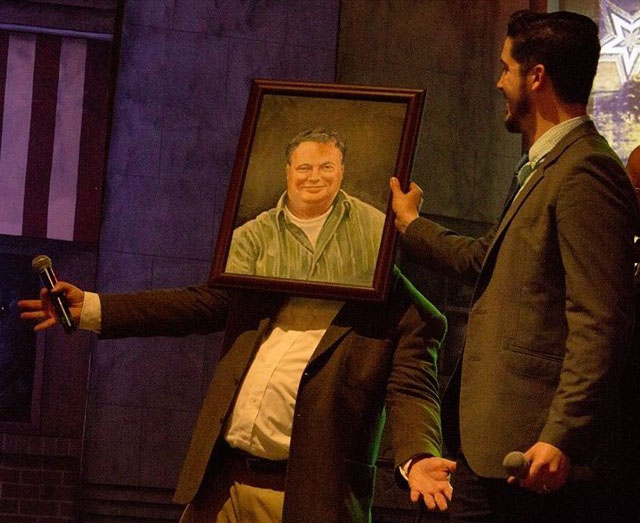
Binghamton natives Everett and Nick De Morier no longer live in the area, but Everett has found subject matter there for two of his books. They join us to talk about their documentary ‘Binghamton: Valley of Creativity’, which premieres at the Bundy Museum’s Annex, and their discovery that when industry left the area, the arts stepped in to fill the void. After the premiere on Thursday, the film will be available to view on YouTube at Gopher Ink Studios. LISTEN TO AUDIO